
Sheep Pregnancy Scanning: The Complete Australian Guide
A complete guide to sheep pregnancy scanning in Australia: why and when to scan, wet and dry versus multiples, costs per head, and recording results.
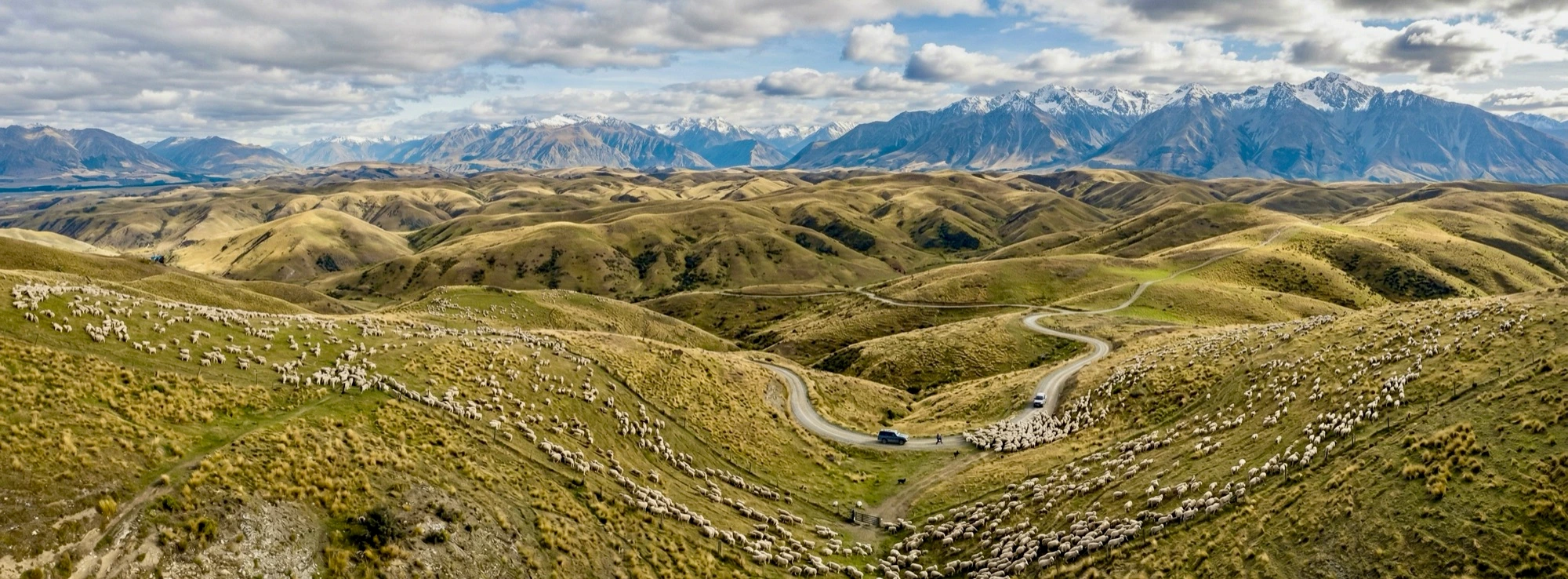
Feeding a mob of ewes the same ration when a third of them are empty and a third are carrying twins is one of the most expensive habits in the sheep game. You overfeed the dries, underfeed the twin-bearers, and lose lambs at both ends. Sheep pregnancy scanning fixes that by telling you exactly what each ewe is carrying, so you can feed and manage her accordingly.
This guide covers the whole picture for Australian producers: why scanning pays, when to do it after joining, the difference between wet/dry and multiples scanning, what it costs per head, how to act on the results, and how to record them so the data works for you year after year.
Quick answer: Scan for pregnancy status (wet or dry) from about 40 days after the rams come out. Scan for multiples (singles, twins, triplets) at 80 to 100 days from the start of joining, ideally 80 to 90 days. Scanning for multiples returns around $5.55 per ewe in extra profit, roughly twice the value of scanning for status alone.
Why scan your ewes?
The case for scanning is both financial and practical, and the numbers are strong.
An MLA and AWI benefit-cost analysis puts the value of scanning for multiples at about $5.55 per ewe scanned in additional profit, compared with roughly $2.65 per ewe for pregnancy status alone. That is a return on investment in the order of 400 per cent. The figure varies by region, averaging closer to $5.75 per ewe in winter-rainfall country and $4.44 in summer-rainfall zones, but it is positive across every scenario modelled. Despite that, a national survey found nearly 70 per cent of producers were not scanning for litter size, which is exactly the gap this practice closes.
Where does the value come from? Scanning lets you:
- Feed to need. Twin-bearing ewes need far more energy in late pregnancy than singles or dries. In the last six weeks, a single-bearer needs around 40 per cent more energy than an empty ewe, and a twin-bearer around 76 per cent more. You cannot feed to those targets if you do not know who is carrying what.
- Lift lamb survival and marking percentage. Twins are where most lamb losses happen. Getting twin-bearers to the right condition and into sheltered paddocks is the single biggest lever on lamb survival.
- Find and manage the dries. Empty ewes can be sold, re-joined, or run harder instead of eating feed for no return. Dry maiden ewes rear 10 to 15 per cent fewer lambs a year, so repeat offenders are worth culling.
- Reduce ewe deaths. Identifying multiple-bearers is the foundation of preventing pregnancy toxaemia (twin-lamb disease), covered below.
- Budget your feed. Knowing your scanning percentage well before lambing lets you plan the late-pregnancy feed spike rather than react to it.
When to scan after joining
Timing is everything with scanning, and it differs depending on what you want to know.
For wet/dry (pregnant versus empty): scan from about 40 days after the rams are removed. By then every pregnancy from the joining is far enough along to detect reliably.
For counting multiples (singles, twins, triplets): scan at 80 to 100 days from the start of joining, with the sweet spot around 80 to 90 days after the rams go in for a standard five-week joining. If you ran an extended joining of more than five weeks, widen the window to roughly 70 to 100 days from rams in.
The reason for the window comes down to foetal size. The reliable window is roughly 40 to 90 days from conception:
- Too early, and small foetuses can be missed and multiples cannot be told apart accurately.
- Too late (past about 100 days), and the foetuses are large enough, with denser bone, that they cloud the ultrasound picture and counting becomes unreliable.
Accuracy also depends on preparation. Ewes should be held off feed for at least six hours before scanning (some contractors prefer overnight) so a full rumen does not obscure the image, and over-fat ewes and inaccurate joining records both make the operator’s job harder.
Wet/dry versus multiples scanning
There are two levels of scanning, and choosing the right one is a value decision.
| Wet/dry scan | Multiples (litter) scan | |
|---|---|---|
| What it tells you | Pregnant or empty | Dry, single, twin or triplet (often early vs late lambers too) |
| Best timing | About 40 days after rams out | 80 to 100 days from joining start (80 to 90 ideal) |
| Accuracy | Very high, over 95% | Over 95% at the right stage; error rises for triplets and above |
| Typical value | About $2.65 per ewe | About $5.55 per ewe |
A skilled professional scanner works to better than 95 per cent accuracy at the correct stage, with well under 5 per cent error in predicting foetal numbers, though the error creeps up once you are separating triplets from twins. A good operator scans in the order of 500 ewes an hour, so the yard work moves quickly.
For most breeding flocks, scanning for multiples is the better investment. The extra information, who is carrying twins and who is empty, is where nearly all the management value sits. Wet/dry alone still beats not scanning, but it leaves money on the table.
What does sheep pregnancy scanning cost?
Scanning is one of the cheapest interventions in the sheep calendar relative to its return. Contractors rarely publish live price lists because rates depend on flock size, travel distance, and whether you want wet/dry or multiples, so treat the following as indicative and get a local quote.
As a guide to current Australian rates:
- Wet/dry scanning: roughly 50 to 80 cents a head.
- Multiples scanning: roughly 75 cents to $1.20 or more a head.
- Foetal ageing (splitting early and late lambers): often around 10 cents a head on top.
- Travel or callout is usually charged in addition, and very small flocks may attract a minimum.
A recent CSIRO analysis used contractor rates of about 50 cents per ewe for status and 75 cents per ewe for multiples, plus a couple of cents for travel, which lines up with what producers are paying. Against a return of several dollars per ewe, and with an in-lamb scanning certificate able to add $20 to $50 to the sale value of a breeding ewe, the cost is easily justified.
Acting on your scanning results
Scanning only pays if you act on it. The data is the start, not the finish.
Draft into management mobs. Split the flock by result: dries, singles, twins, and triplets, and by early versus late lambers if you have foetal ageing. Each mob then gets managed to its own plan.
Feed to condition-score targets. Aim for ewes to reach lambing at a condition score of about 3.0 for singles and 3.3 for twins. Preferentially feed the multiple-bearers, and allocate them your best feed-on-offer, targeting around 1,000 kg of dry matter per hectare for singles and 1,500 for twins.
Prevent pregnancy toxaemia. Twin-lamb disease strikes in the last few weeks of pregnancy, especially in twin and triplet-bearers, when the ewe cannot meet the energy demand and her blood glucose falls. Identifying multiple-bearers and feeding them a higher-energy ration through late pregnancy is the core prevention, and it is impossible without scanning.
Manage lambing paddocks and stocking. Give twins and triplets the sheltered paddocks and lower stocking rates. A common guide is fewer than 18 ewes per hectare in twin-lambing paddocks, with smaller mob sizes for multiples than for singles.
Cull and monitor. Move repeat dry ewes on, and watch the gap between your scanning percentage and your marking percentage. A large gap points to a lamb-survival problem worth investigating. For Merinos, realistic survival targets are 90 per cent or better for singles and around 70 per cent for twins.
Recording scan results against your ewes
The mob is easy to draft on the day. The value compounds when the result is recorded against each ewe and carried forward.
Modern scanning is increasingly done with electronic identification (EID). As each ewe passes through the race, her tag is read and her scanning result, foetal number, foetal age, and cycle, is captured against her individual record. Alternatively, you draft or raddle by result on the day, then read each mob’s tags into a group afterwards. Either way you end up with a permanent record rather than a spray mark that washes off, and if mobs mix you can re-draft from the data.
This is where Frisbee fits into a breeding program. Frisbee keeps joining, scanning, and lambing records against each ewe and mob, so the story of each season is captured in one place:
- Record which ewes were joined, to which rams, and when.
- Store the scanning result, singles, twins, or empty, against the ewe or the mob.
- Record the lambing outcome and marking data later, and compare it back to what she scanned.
- Work in the yards on your phone, with one-handed entry and offline capability that syncs when you have signal.
Over a few seasons that builds into real flock intelligence: which ewes consistently scan and rear twins, which are repeatedly dry, and whether your management is closing the gap between scanning and marking. Culling and selection decisions stop being guesswork.
Frequently asked questions
When should you scan sheep after joining? Scan for wet or dry from about 40 days after the rams come out. Scan for multiples at 80 to 100 days from the start of joining, ideally 80 to 90 days for a standard five-week joining. Scanning too early or later than about 100 days reduces the accuracy of counting foetuses.
How accurate is sheep pregnancy scanning? A skilled professional scanner is better than 95 per cent accurate at the correct stage of pregnancy, with well under 5 per cent error in predicting foetal numbers. Accuracy is highest for distinguishing pregnant from empty and for singles versus twins, and drops slightly when separating triplets.
How much does it cost to scan sheep in Australia? Indicatively, wet/dry scanning costs around 50 to 80 cents a head and multiples scanning around 75 cents to $1.20 or more a head, plus travel. Rates depend on flock size and distance, so get a local quote. The return, around $5.55 per ewe for multiples scanning, far exceeds the cost.
What is the difference between wet/dry and multiples scanning? Wet/dry scanning only tells you whether a ewe is pregnant or empty. Multiples scanning tells you how many lambs she is carrying, which lets you feed singles, twins, and triplets separately. Multiples scanning is worth roughly twice as much per ewe.
Is pregnancy scanning worth it for a small flock? Usually yes, because the per-ewe return is strong, but check the travel and minimum charges with your contractor. Even for smaller mobs, knowing which ewes are carrying twins lets you target feed and shelter where it matters and reduce ewe and lamb losses.
Turn your scanning day into a lasting record.
Frisbee keeps joining, scanning, and lambing records against every ewe and mob, so each season’s data builds on the last. Draft, feed, and cull with confidence, all from your phone in the yards.
Book a Free Demo to see how Frisbee works for your flock.
Related reading:
- Sheep Management Software: The Complete Guide for Australian Producers
- Managing Multi-Breed Sheep Operations: One System for All Your Flocks
- Mobile Livestock Management: Running Your Stud From Your Phone
- Livestock Ear Tag Colours in Australia: The Complete Guide
This guide is general information, not veterinary or nutritional advice. Scanning timing, condition-score targets, and feed budgets vary with your region, breed, and season. Confirm your program with your scanning contractor and adviser.
Tagged
Run a sharper stud, on one platform.
Genetics, sales, clients and marketing — without the spreadsheet sprawl. Built for Australian cattle and sheep producers.
Get started with FrisbeeKeep reading
View all →
Livestock Ear Tag Colours in Australia: Complete Guide
A guide to livestock ear tag colours in Australia, covering NLIS sheep colours by year, cattle breeder and post-breeder tags, and state rules.
What Is Drenching Cattle? A Best Practice Guide for Australia
A best practice guide to drenching cattle in Australia, covering worm drenches, drench resistance, rotation, worm egg counts, dosing, and records.

Building Livestock Records That Survive a Handover
Spreadsheets fade and people leave. How Australian cattle and sheep producers build livestock records that outlast any one person on the operation.
Run your stud on Frisbee
CRM, sale catalogues, and marketing campaigns in one place, purpose-built for Australian cattle and sheep studs.
14-day free trial · No credit card required