
Livestock Ear Tag Colours in Australia: Complete Guide
A guide to livestock ear tag colours in Australia, covering NLIS sheep colours by year, cattle breeder and post-breeder tags, and state rules.
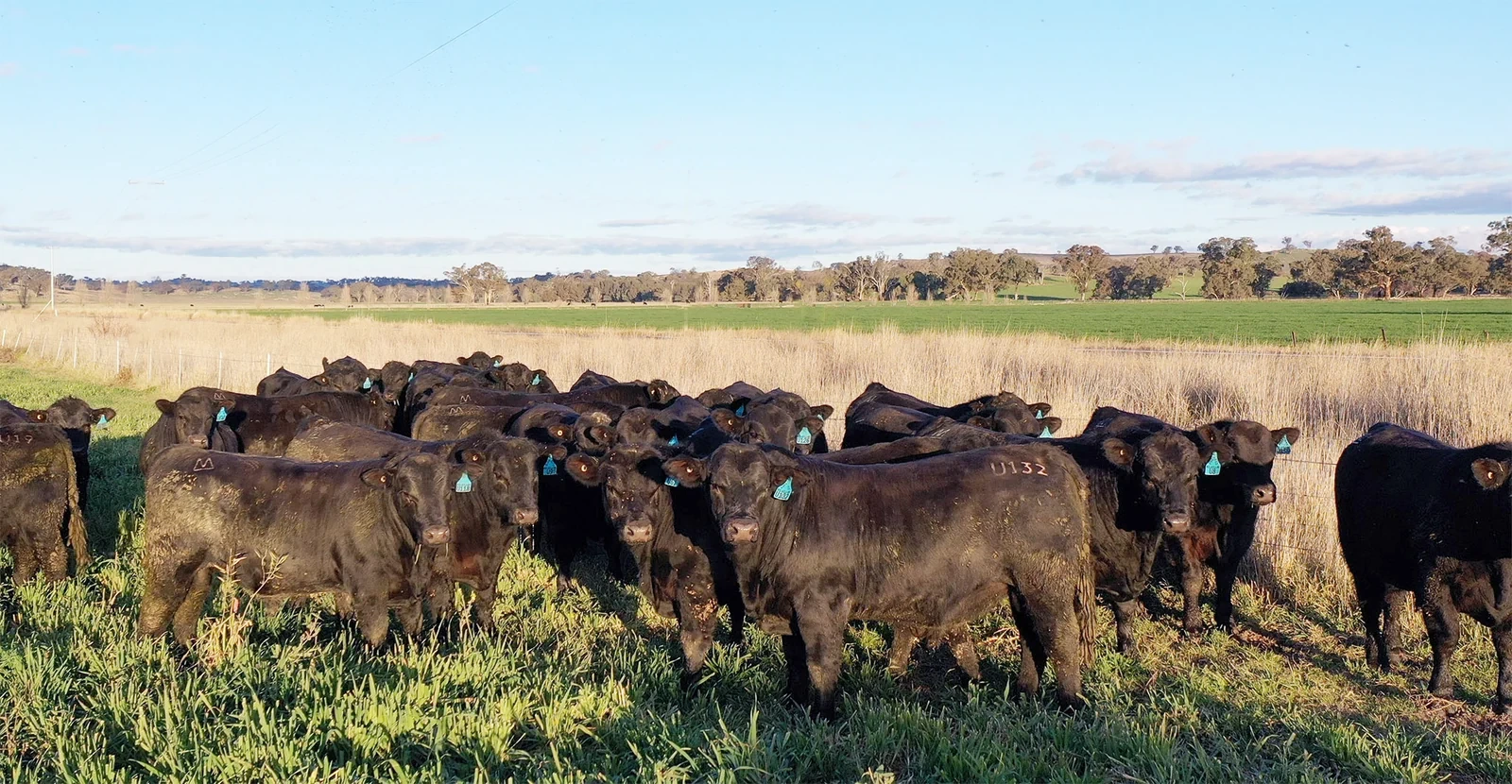
If you have ever stood at the drafting race squinting at a mob and trying to remember whether the orange tags are this year’s lambs or last year’s, you are not alone. Sheep tag colours and cattle tag rules trip up plenty of experienced producers, and the ground has shifted again with the national move to electronic identification.
This guide brings the whole picture together in one place: the NLIS year-of-birth colour system, a lookup table covering the past decade and the next few years, how cattle tagging differs from sheep, the state rules (Western Australia gets its own call-out because its rules are stricter), what to do when a tag is lost, and how it all ties back to keeping accurate animal records.
Everything here is checked against the current Integrity Systems Company (ISC) standards and state department of agriculture sources. Where the rules are still changing, we have flagged it.
Quick answer: In Australia, sheep and farmed goat ear tags rotate through an eight-colour year-of-birth cycle. Lambs and kids born in 2026 wear orange. Cattle are different: their NLIS device is white (bred on the property) or orange (introduced), with year colours only appearing on optional visual management tags.
What are NLIS ear tags, and why do the colours matter?
The National Livestock Identification System (NLIS) is Australia’s scheme for tracing livestock from property of birth to slaughter. It underpins our disease response capability, supports export market access, and helps deter stock theft. Every sheep, goat, and head of cattle needs to carry an approved identifier before it moves off a property.
Tag colour does real work in that system. For sheep and goats, the colour tells you at a glance which year an animal was born, which matters for drafting age groups, culling decisions, managing withholding periods, and sorting mobs at sale time. A consistent colour system means a buyer or a saleyard can read the age of a mob without opening a single record.
There are two things a tag colour can signal:
- Year of birth (the eight-colour rotation, used for sheep and goats, and by convention on cattle management tags).
- Tag type, specifically whether an animal was bred on the property (breeder tag) or introduced from somewhere else (post-breeder tag).
Get these two ideas straight and the rest falls into place.
The NLIS year-of-birth colour system explained
Australia uses an eight-colour rotation for the year of birth. The colours cycle in a fixed order and then repeat every eight years:
- Black
- White
- Orange
- Light green
- Purple
- Yellow
- Red
- Sky blue
After sky blue, the cycle returns to black and starts again. Because it repeats on an eight-year loop, an orange tag could mean an animal born in 2010, 2018, or 2026. In practice that is rarely a problem, because very few commercial sheep are still in the flock eight years later, but it is the reason the colour is always read alongside the animal’s records rather than in isolation.
The order and the colours are set out in the ISC Standard for NLIS (Sheep and Goats) visual tags. Under the national standard the year colour is strongly recommended for breeder tags. The one colour that is a hard rule everywhere is pink, which is reserved for post-breeder tags and may never be used on a breeder tag. More on that below.
Sheep tag colours by year (2016 to 2031)
Here is the year-to-colour lookup for sheep and farmed goats. The current year is highlighted.
| Year of birth | Tag colour |
|---|---|
| 2016 | Black |
| 2017 | White |
| 2018 | Orange |
| 2019 | Light green |
| 2020 | Purple |
| 2021 | Yellow |
| 2022 | Red |
| 2023 | Sky blue |
| 2024 | Black |
| 2025 | White |
| 2026 (current year) | Orange |
| 2027 | Light green |
| 2028 | Purple |
| 2029 | Yellow |
| 2030 | Red |
| 2031 | Sky blue |
So a 2026-born lamb wears an orange tag, 2025 lambs are white, and 2024 lambs are black. This table is consistent across the ISC visual tag standard and the WA DPIRD year-of-birth colour tables.
One important change: for lambs and kids born from 1 January 2025, the year colour now lives on an electronic tag (eID) rather than a visual-only tag. The colour system has not gone away, it has simply moved onto the electronic device. We cover the eID timeline in detail further down.
Cattle ear tags: breeder, post-breeder and year colours
Cattle tagging works on a different logic to sheep, and this is where a lot of confusion creeps in.
Every beast must carry an NLIS-accredited electronic (RFID) device before it leaves a property. That device is either a single electronic ear tag or a rumen bolus paired with a visual tag. Crucially, the NLIS cattle device only comes in two colours, and they signal tag type, not year of birth:
- White breeder tag. Applied on the property of birth, printed with that property’s PIC. Used to permanently identify cattle before they leave where they were born.
- Orange post-breeder tag. Applied to introduced cattle that were never tagged, or that have lost their original device. Registered to the PIC of the property the animal is now on.
The NLIS device carries a “Do not remove” instruction on the male button, and it is an offence to take a working device off a live animal. Placement is the centre of the right (offside) ear, per the ISC cattle tagging protocols.
Do cattle tags have year colours?
Not on the NLIS device itself. As WA DPIRD puts it plainly, unlike sheep and goats, NLIS cattle tags are electronic and are not colour coded for year of birth.
Where you do see year colours on cattle is on visual management tags, which many producers run alongside the NLIS device so they can read an animal’s drop from a distance. This is a convention, not a legal requirement, and no state mandates it. Producers who use them generally follow the same eight-colour rotation as sheep. Tag suppliers sell “matching management sets” that pair a coloured visual tag with the electronic device for exactly this reason.
The NLIS cattle device does encode a year, but as a letter in the tag number that records the year the tag was manufactured, not the animal’s birth year. The letters run alphabetically and skip I and O to avoid confusion with 1 and 0:
| Year (device manufacture) | NLIS year letter |
|---|---|
| 2022 | T |
| 2023 | U |
| 2024 | V |
| 2025 | W |
| 2026 | X |
| 2027 | Y |
| 2028 | Z |
If you run coloured visual management tags on your cattle, the colour column from the sheep table above applies (2026 is orange, and so on). Just remember it is your own management convention, whereas the white or orange NLIS device is the legal identifier.
State variations, and why Western Australia is different
The national NLIS framework is consistent across the country, but tag colour rules and eID deadlines vary by state. Here is where it matters.
Western Australia (strictest on colour). WA is the only state that writes the year colour into regulation. Under the Biosecurity and Agriculture Management (Identification and Movement of Stock and Apiaries) Regulations 2013, the NLIS tag must be the correct colour for the year of birth, and a year-of-birth colour eID must be applied before the animal reaches six months of age. WA also allows a 3-character registered brand on the tag in place of the PIC. Getting the colour or the ear wrong in WA can trigger the need to re-tag, or penalties under the regulations. WA also runs an earlier final eID deadline than the rest of the country (see below).
Victoria (eID pioneer). Victoria mandated electronic tags for sheep and goats born from 1 January 2017, years ahead of the national scheme. Its breeder tags are colour coded for year of birth, and post-breeder tags are pink.
New South Wales. Year-of-birth colour tags are recommended where the age is known, not compulsory.
Queensland, South Australia and Tasmania. These states follow the national standard: year colour is recommended for breeder tags, and pink for post-breeder tags is the hard rule.
If you buy or sell across state lines, tag to the strictest rule that applies to where the animals are and where they are going. In practice, using the correct year-of-birth colour everywhere keeps you compliant no matter the destination.
The move to electronic ID (eID) for sheep and goats
The biggest change to sheep and goat identification in a generation is the national shift from mob-based visual tags to individual electronic ID. Australia’s agriculture ministers agreed to the national plan in September 2022, and it is rolling out in stages.
- 1 January 2025. All sheep and farmed goats born on or after this date must have an NLIS-accredited eID before they leave their property of birth. Visual-only tags are no longer accepted to identify animals born after this date. (Source: ISC Sheep and Goat eID.)
- 1 January 2027. In most states, all remaining sheep and goats of any age must carry an eID before leaving any property.
Two state timelines differ and are worth knowing:
- Victoria has required eID since 2017 and is already fully electronic.
- Western Australia brings its final deadline forward to 1 July 2026, from which point all sheep and goats, including animals born before 2025, must be eID tagged before leaving any property or facility, with movements recorded on the NLIS database. WA also permits a single-colour yellow transition eID for stock bred on the property before 1 January 2025 that leave after 1 July 2026.
The practical upshot: the year colour system continues, but for younger animals it now sits on an electronic tag that also carries a unique lifetime number. That number is what lets you scan an animal and pull up its complete history, which is exactly where good record keeping earns its place.
Pink and post-breeder tags
Pink is the one colour with a single, protected job. A pink tag means post-breeder: the animal is not on the property where it was born.
When you buy in sheep or goats that carry only a visual tag, or that need re-identifying, you apply a pink post-breeder tag printed with your own PIC (or brand in WA), in the opposite ear to the year-colour tag. A breeder tag may never be pink, and pink may only ever be used for post-breeder identification.
For cattle, the equivalent of pink is the orange post-breeder device described earlier. Same idea, different colour.
Under the eID system, an animal only ever carries one electronic device at a time, so you generally only need a pink post-breeder eID if the animal was never tagged by its breeder, or if its original device is lost or unreadable.
Which ear does the tag go in?
Placement is part of the standard, and it doubles as a quick visual sex check when you are working a mob.
For sheep and goats (WA rule, widely followed elsewhere):
- Year-of-birth colour tag: left ear for males, right ear for females.
- Earmark: the opposite ear to the coloured tag.
- Pink post-breeder tag: the opposite ear again (right ear for males, left for females).
For cattle, the NLIS device goes in the centre of the right (offside) ear.
What to do when a tag is lost or damaged
Tags get ripped out on fences, scrub, and yard rails. It happens. Here is the correct response, because doing it wrong breaks the traceability chain.
If the animal was born on your property: replace it with another breeder tag. For sheep and goats that means the year-of-birth colour for that animal’s drop. For cattle it means a white breeder tag.
If the animal was not born on your property: replace it with a pink post-breeder tag (sheep and goats) or an orange post-breeder device (cattle), printed with your PIC.
Record the replacement on the NLIS database. Lodge a “Replaced tags” transaction that links the old device number to the new one, so the animal’s lifetime history stays intact. The old and new tags must both be registered to the same PIC, and that PIC must be linked to your NLIS account. (See the ISC tag replacement guide.)
Never remove a working NLIS device. It is an offence to remove a permanent NLIS tag from a live animal. Replace missing tags, do not swap functioning ones.
A quick note for WA: replacement eIDs should be fitted as soon as it is reasonable once you notice an animal is without one, and even deceased animals with eIDs need to be updated on the database.
Reading tags at the crush and tying them to your records
A tag colour tells you the year. A tag number tells you the animal. The value is unlocked when that number is joined to a record you can actually act on.
At the crush or in the race, an EID reader (a stick or panel reader) scans the electronic tag and returns the animal’s unique number. On its own that is just a string of digits. Paired with software, it becomes an instant recall of everything you know about that animal: its dam and sire, its weights over time, its treatment history and withholding status, its scanning result, and its sale history.
This is where Frisbee fits in. The Frisbee iOS app is built for capturing and recalling records right where the work happens:
- Scan or enter an animal’s NLIS/EID number and pull up its full individual record on your phone at the crush.
- Record weights as animals come through, with one-handed operation designed for yard work.
- Log treatments and health events in the paddock, attached to the right animal.
- Capture photos against a record on the spot.
- Work offline where there is no signal, then auto-sync when you are back in range.
The tag is the key. Your records are the door it opens. When the two are connected, drafting by age group, chasing withholding periods, and preparing a mob for sale stop being memory exercises and become a two-second lookup.
Frequently asked questions
What colour are sheep tags in 2026? Orange. Lambs and farmed goat kids born in 2026 wear orange year-of-birth tags, following the eight-colour NLIS rotation.
What is the sheep ear tag colour order? Black, white, orange, light green, purple, yellow, red, then sky blue, repeating every eight years.
Do cattle ear tags change colour each year? The NLIS cattle device does not. It is white for breeder tags and orange for post-breeder tags. Year colours only appear on optional visual management tags that some producers run alongside the electronic device.
What does a pink ear tag mean? For sheep and goats, pink is reserved for post-breeder tags, meaning the animal is not on its property of birth. The cattle equivalent is an orange post-breeder device.
Is the year colour compulsory? In Western Australia, yes, it is written into regulation. Nationally the year colour is strongly recommended for breeder tags, while pink for post-breeder tags is mandatory everywhere.
When do all my sheep need electronic tags? Sheep and goats born from 1 January 2025 already need an eID before leaving their property of birth. In most states, all sheep and goats of any age will need an eID to move from 1 January 2027. Western Australia’s final deadline is 1 July 2026. Victoria has required eID since 2017.
What do I do if a tag falls out? Replace a home-bred animal’s tag with a breeder tag (year colour for sheep, white for cattle), or a bought-in animal’s tag with a pink or orange post-breeder tag carrying your PIC, and lodge a “Replaced tags” transaction on the NLIS database to preserve traceability.
Want your tag numbers to actually do something?
Frisbee turns the number on the tag into a full animal record you can read, update, and act on from your phone at the crush. Weights, treatments, breeding, and sale history, all in one place and all synced to the cloud.
Book a Free Demo to see how it works on your operation.
Related reading:
- Mobile Livestock Management: Running Your Stud From Your Phone
- The Frisbee iOS App Is Now Live on iPhone
- Livestock Records: The Handover-Ready Operation
- Sheep Management Software: The Complete Guide for Australian Producers
This guide is general information, not compliance advice. NLIS rules and eID deadlines change and vary by state. Always confirm current requirements with Integrity Systems Company and your state department of agriculture before tagging or moving stock.
Tagged
Run a sharper stud, on one platform.
Genetics, sales, clients and marketing — without the spreadsheet sprawl. Built for Australian cattle and sheep producers.
Get started with FrisbeeKeep reading
View all →
Sheep Pregnancy Scanning: The Complete Australian Guide
A complete guide to sheep pregnancy scanning in Australia: why and when to scan, wet and dry versus multiples, costs per head, and recording results.
What Is Drenching Cattle? A Best Practice Guide for Australia
A best practice guide to drenching cattle in Australia, covering worm drenches, drench resistance, rotation, worm egg counts, dosing, and records.
Building Livestock Records That Survive a Handover
Spreadsheets fade and people leave. How Australian cattle and sheep producers build livestock records that outlast any one person on the operation.
Run your stud on Frisbee
CRM, sale catalogues, and marketing campaigns in one place, purpose-built for Australian cattle and sheep studs.
14-day free trial · No credit card required