
Building Livestock Records That Survive a Handover
Spreadsheets fade and people leave. How Australian cattle and sheep producers build livestock records that outlast any one person on the operation.
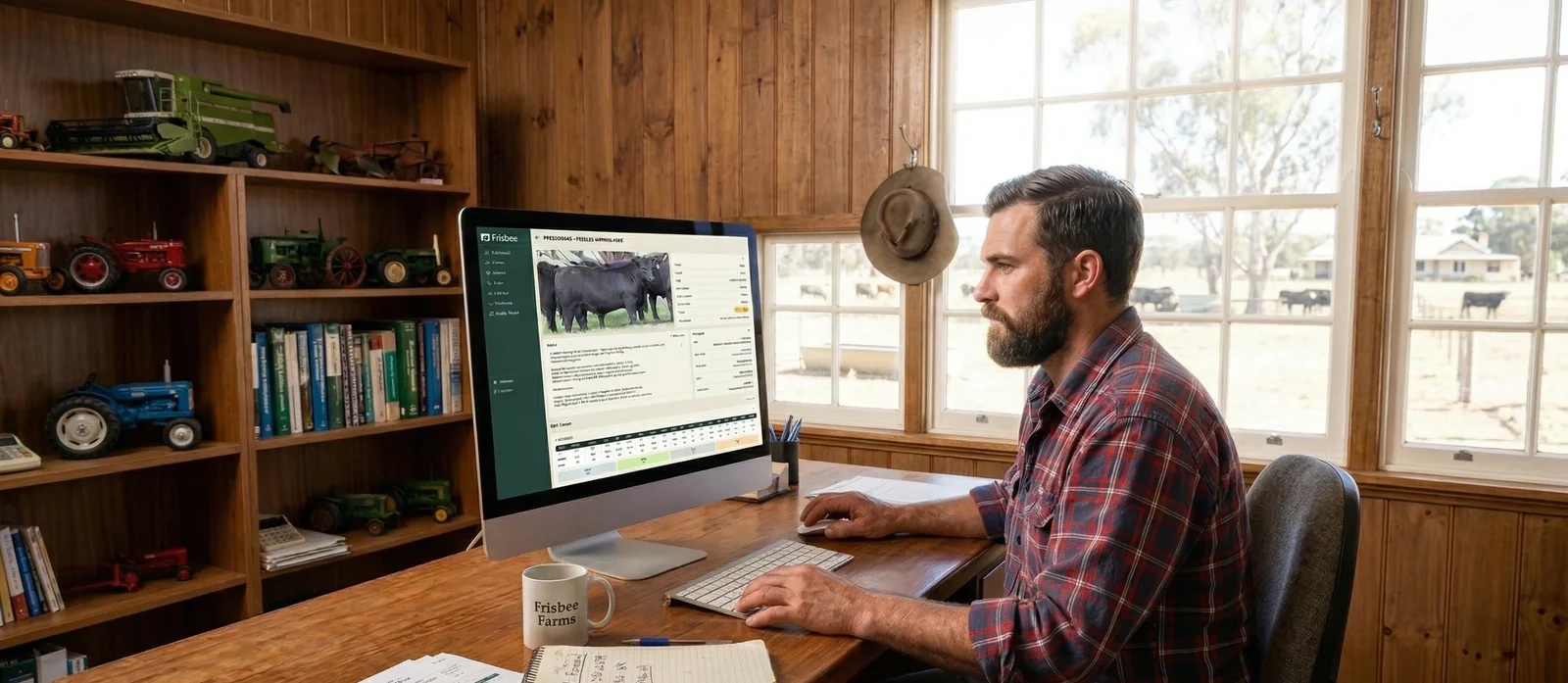
Where do your records actually live?
In a spreadsheet only you understand? In a notebook on the dash of the ute? In the head of the bloke who’s been there since the 90s? On a desktop PC in the office that hasn’t been backed up since the last drought?
Most Australian cattle and sheep operations have an answer to that question that makes them quietly nervous. Because the records you build over a lifetime, pedigrees, weights, joinings, treatments, sale results, are some of the most valuable assets on the place. And if they only exist in one person’s head or one person’s handwriting, the operation is one resignation, one accident, or one retirement away from losing its memory.
This post is about fixing that. Not by buying a fancier filing cabinet, but by treating your records like the long-term business asset they are.
The Records You’ve Built Are Worth More Than You Think
Walk through what’s actually in your records and the value gets obvious fast.
- Pedigrees — generations of breeding decisions, the lineage of every animal, the bloodlines you’ve selected for and against.
- Weights — birth, weaning, yearling, mature, every weighing that tells you how an animal performed and how its progeny are tracking.
- Joinings and lambings/calvings — who went to whom, when, what came of it, conception rates, scanning results.
- Treatments and health — every drench, vaccine, intervention, condition score, the things that explain why an animal did or didn’t thrive.
- Sale results — what each animal made, who bought it, what their progeny went on to do.
That’s not paperwork. That’s the operation’s intellectual property. It’s the reason your stud bull commands the price he does. It’s the evidence behind every breeding decision you’ll make for the next ten years. It’s what a buyer is actually paying for when they buy from you instead of someone else.
And right now, on most operations, it lives in a form that one person could accidentally delete on a Tuesday afternoon.
The “It’s All In My Head” Problem
The most common record-keeping system in Australian agriculture is the manager’s memory. It’s also the most fragile.
Here’s what it looks like in practice:
- Only one person knows which paddock that mob came out of last autumn.
- Only one person remembers why you stopped using that sire line.
- Only one person can interpret the shorthand in the joining notebook.
- Only one person knows the buyer’s preferences from the last five years of sales.
- Only one person can tell you why a particular ewe is in the cull mob.
When that person is in the office, the operation runs fine. When they’re off sick, on holiday, or one day not there at all, the operation has amnesia.
This isn’t a criticism of how it’s always been done. It’s an honest look at the risk that’s built into it. A 30-year breeding program shouldn’t depend on one person remembering everything.
What “Handover-Ready” Actually Means
A handover-ready operation is one where the next person who walks in, whether that’s a son or daughter, a new manager, a vet, a classer, or a contract musterer, can pick up the records and understand what’s going on without anyone re-explaining it.
That means the records need to be:
- Complete — every animal has a full lifetime history, not gaps where someone forgot to write things down.
- Structured — the same fields, the same format, the same logic across every record, so you don’t need a translator.
- Accessible — more than one person can get to them, from more than one place.
- Yours — exportable in a usable format, not locked behind someone else’s portal or PDF.
- Audit-trailed — when something changes, you can see who changed it and when.
This isn’t a software pitch. It’s just what “good records” actually means once you stop accepting “good enough.”
Why Spreadsheets Eventually Run Out of Road
Spreadsheets are how most operations start, and there’s nothing wrong with that. They’re cheap, they’re flexible, and they get the job done for a while.
The trouble starts when:
- The file lives on one computer and nobody else can edit it without overwriting each other.
- The formulas break and nobody remembers how they were set up.
- The person who built it leaves, and nobody else can interpret the column structure.
- You want to bring in EBVs, photos, treatments, and sale data and the spreadsheet wasn’t built for any of that.
- You need to find one animal’s full history and end up scrolling for ten minutes.
- The file gets corrupted, or someone saves over it, or it just disappears in a hard drive failure.
A spreadsheet is a tool, not a system. The point at which you can’t run the operation without it is the point at which you need something more durable underneath it.
What a Centralised System Should Give You
When you move from scattered records to a centralised system, the test isn’t “is it digital?” The test is whether the system gives you these things:
One animal, one record, one source of truth
Every animal has a single record that holds its full lifetime: birth, pedigree, weights, treatments, joinings, photos, sale outcome. When the vet asks about a cow, you pull up the record and everything is there.
Multi-user access with clear roles
Your staff, your family, your contractors, and your professional advisers can all see what they need to see, with permissions that match their role. No more “ring me when you need to know something.”
Audit trails on every change
When a weight gets entered, a treatment gets logged, or a record gets edited, the system knows who did it and when. Disputes become checkable, not arguable.
Exportable, in your format
The data is yours. If you want to pull it into a report, hand it to a consultant, or take it to a different system, you can. No lock-in, no “we’ll need to put in a request for that.”
Mobile-first capture
Records get entered where the work happens, in the yards, at the crush, in the paddock, not transcribed from a notebook three days later when half the detail has been forgotten.
These aren’t nice-to-haves. They’re the difference between a system that survives a handover and one that doesn’t.
A Simple Test: Could You Hand the Operation Over Tomorrow?
Try this exercise. Imagine you had to step out of the operation for six months tomorrow. A family member, a new manager, or a trusted neighbour was going to run things while you were away.
Walk through the questions they’d need to answer on day one:
- Which mob is in which paddock and why?
- What’s the joining plan for the next three months?
- Which animals are flagged for the cull list and what’s the reason?
- Who are the top five buyers from last year’s sale and what did they buy?
- Which animals are due for treatment and when?
- What’s the pedigree of the sire group going out next month?
If the answer to most of those is “they’d have to ring me,” the operation is currently running on you, not on its records. That’s a risk worth fixing while you have time to fix it on your own terms, rather than at the worst possible moment.
How Frisbee Helps
Frisbee is built for exactly this problem. It gives Australian cattle and sheep producers one place to keep the records that matter, structured the way the industry actually works, and accessible to everyone who needs them.
- One animal, one record — full lifetime history, pedigree, performance, treatments, photos and sale outcome in a single place.
- Multi-user access with permissions — staff, family, contractors and advisers can all work from the same source of truth, with clear audit trails on every change.
- Mobile capture in the yards and paddock — record weights at the crush, log treatments where they happen, and have it sync back to the central record automatically.
- EBV and Sheep Genetics integration — bring breeding values in alongside your own performance data without re-keying.
- Full export, any time — your data is yours. Pull it out in your format whenever you want.
- Sale-ready outputs — turn the records you’ve built all year into a digital catalogue, a sale page, and post-sale analytics without rebuilding from scratch.
The goal isn’t to replace the operator’s judgement. The goal is to make sure the records that judgement is built on are still there, in usable form, when the next person walks in.
Final Word: Build the Memory Before You Need It
The best time to build a handover-ready record system is before you need one. The worst time is in the middle of a succession, a staff change, or a health scare.
Your records are the memory of the operation. Treat them that way. Get them out of one person’s head, off the dash of the ute, and into a system the whole team can rely on. It’s the kind of thing nobody notices until the day it saves you, and on that day, you’ll be very glad you did it.
Ready to build records that outlast any single person on the operation?
Book a Free Demo and see how Frisbee turns scattered notes and spreadsheets into a single, exportable record system you actually own.
Related reading:
Tagged
Run a sharper stud, on one platform.
Genetics, sales, clients and marketing — without the spreadsheet sprawl. Built for Australian cattle and sheep producers.
Get started with FrisbeeKeep reading
View all →
Livestock Ear Tag Colours in Australia: Complete Guide
A guide to livestock ear tag colours in Australia, covering NLIS sheep colours by year, cattle breeder and post-breeder tags, and state rules.
Sheep Pregnancy Scanning: The Complete Australian Guide
A complete guide to sheep pregnancy scanning in Australia: why and when to scan, wet and dry versus multiples, costs per head, and recording results.
What Is Drenching Cattle? A Best Practice Guide for Australia
A best practice guide to drenching cattle in Australia, covering worm drenches, drench resistance, rotation, worm egg counts, dosing, and records.
Run your stud on Frisbee
CRM, sale catalogues, and marketing campaigns in one place, purpose-built for Australian cattle and sheep studs.
14-day free trial · No credit card required