
Know Who's Watching: Buyer Favourites and Sale Catalogue Analytics
Frisbee digital sale catalogues let buyers save favourite lots and add notes, so you can see which lots draw attention before sale day.
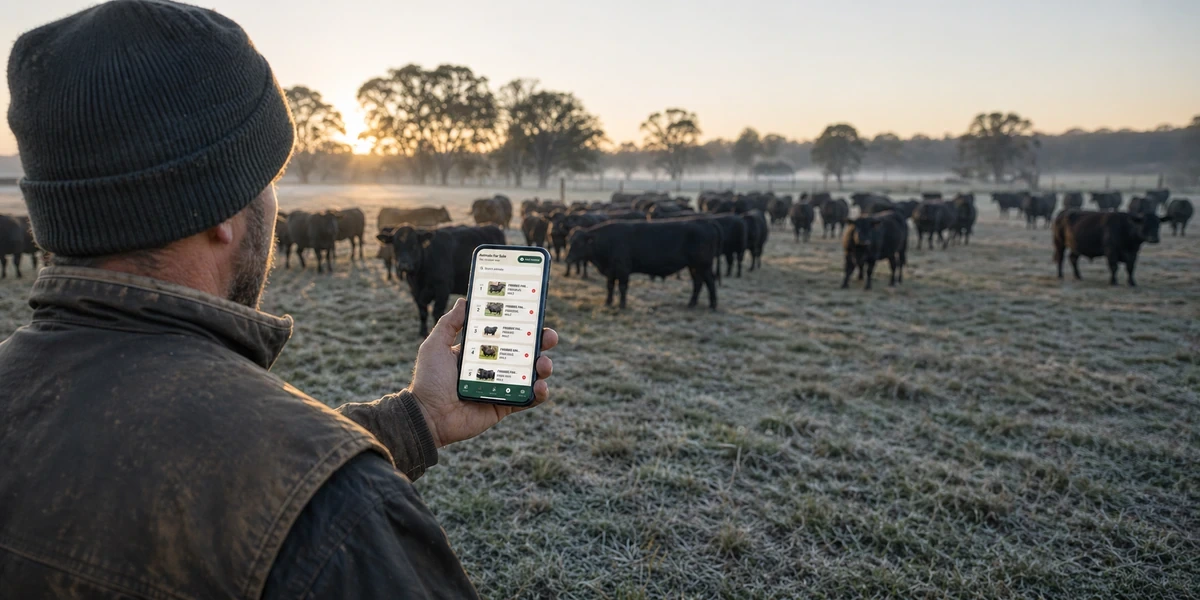
Last sale season we wrote about why a digital sale catalogue beats a PDF every time. One link, always up to date, filterable by sire, trait, and price. That part hasn’t changed.
What has changed is what your catalogue can now tell you. Buyers can sign in, build a shortlist, and take notes against the lots they like. And on your side, you get a view of how buyers are engaging with your catalogue while there’s still time to act on it.
This is the bit that’s been missing from sale marketing for a long time. Print catalogues never told you anything. PDFs told you a download count, if you were lucky. Now your catalogue is a live conversation.
What’s New in the Catalogue
Three changes, all live in your sale management tools right now.
Buyer accounts. Anyone viewing your catalogue can create a free account. They don’t have to. The catalogue still works for anonymous browsers. But once they sign in, the experience gets a lot more useful for them, and a lot more useful for you.
Favourites and notes. Signed-in buyers can save any lot to a personal shortlist, and write notes against individual animals to remember what they were thinking when they get back to the catalogue later.
Producer analytics. Your sale dashboard now includes a view of how buyers are engaging with your catalogue, so the quiet signals you used to miss are now sitting in front of you.
Why Buyers Will Actually Use It
This only works if buyers see value in signing in. They do, because the alternative is what they’ve always done: print the catalogue, scribble on the margins, lose the printout, scribble on a fresh one.
A signed-in buyer can sit down with the catalogue at the kitchen table on a Sunday night, pick out twelve lots that look interesting, then come back on Wednesday morning at the yards and still have all twelve waiting on their phone. They can write “max bid $9k” against Lot 14, “needs structural inspection” against Lot 22, and “backup if 14 goes too high” against Lot 31. By sale day they walk in with a plan, not a guess.
It’s a calmer, more confident way to prepare. That alone is worth the sign-in.
What Producers Now See
The new analytics view sits inside your existing sale management dashboard. No new login, no separate tool.
You get visibility into how your catalogue is performing in the lead-up to sale day, including which lots are pulling the most attention from buyers. The detail will keep growing, but even at a glance it changes the conversation. You stop guessing where interest sits and start seeing it.
A buyer who keeps coming back to your catalogue and shortlisting lots is not a tyre-kicker. They’re a serious bid waiting to happen, and now you have a reason to ring them.
Use the Signal Before Sale Day
A few practical ways producers can use this in the lead-up to sale:
Spot the dark horses. Sometimes a lot you didn’t expect to feature heavily is quietly attracting attention. That’s a phone call worth making. Find out what buyers want to know, line up an inspection, and turn warm interest into firm bids.
Find the quiet ones. Lots that aren’t gathering interest are telling you something. Maybe the photo isn’t doing them justice. Maybe the description is thin. Maybe the reserve looks high relative to the data on the page. You still have time to swap a photo, add a video, or tighten up the copy.
Plan inspection day. If you can see which lots are pulling the most interest before inspection day, you can move them to the front of the run, have the relevant sires’ progeny ready to walk past, and brief your team to anticipate questions on those animals.
A Quieter Way to Build Relationships
Most stud sales operate on relationships built over years. The new catalogue tools don’t replace that. They support it.
A returning buyer doesn’t want to fill out a form telling you what they’re after. They want to browse, save what catches their eye, and have you reach out at the right moment. The favourites and notes system gives them that. The analytics gives you the moment.
If you’ve ever finished a sale and thought “I wish I’d known so-and-so was that interested in Lot 42,” this is the fix. The catalogue is now telling you in real time.
Getting Set Up
If you’re already running your sale through Frisbee, your existing catalogue link continues to work and the new buyer-side and analytics features are part of the platform. Get in touch if you’d like a hand turning them on for an upcoming sale.
If you’re preparing for the spring 2026 ram sales or the 2027 bull sale season, this is a good time to think about how your catalogue, your buyer database, and your follow-up process all sit together. The data is only useful if someone acts on it.
For the broader picture on running a modern sale, our bull sale workflow guide walks through the full cycle from preparation to post-sale.
Ready to See It on Your Own Stock?
Book a free demo and we’ll spin up a sample catalogue from your animals with favourites and analytics turned on. It takes about ten minutes, and you’ll see the buyer view and the producer view side by side.
Or start a free trial and build your next catalogue yourself.
Related reading:
Tagged
Run a sharper stud, on one platform.
Genetics, sales, clients and marketing — without the spreadsheet sprawl. Built for Australian cattle and sheep producers.
Get started with FrisbeeKeep reading
View all →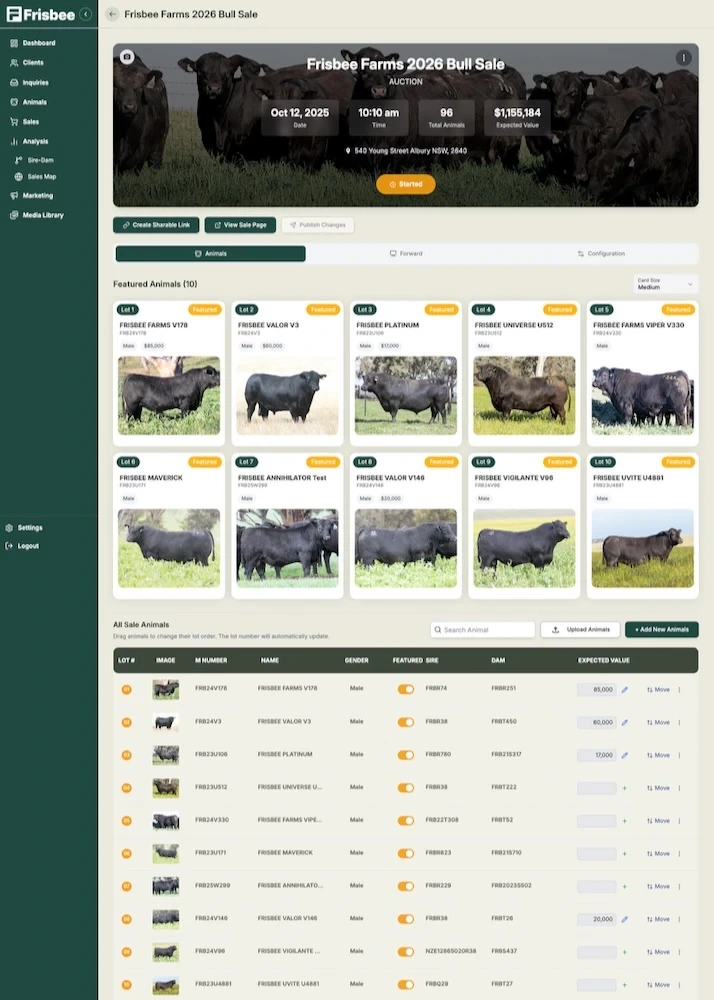
Print Catalogues in Minutes and Smarter Buyer Matching
Two new Frisbee tools for spring sales: generate a print-ready sale catalogue from your event, and see which lots each buyer is most likely to want.
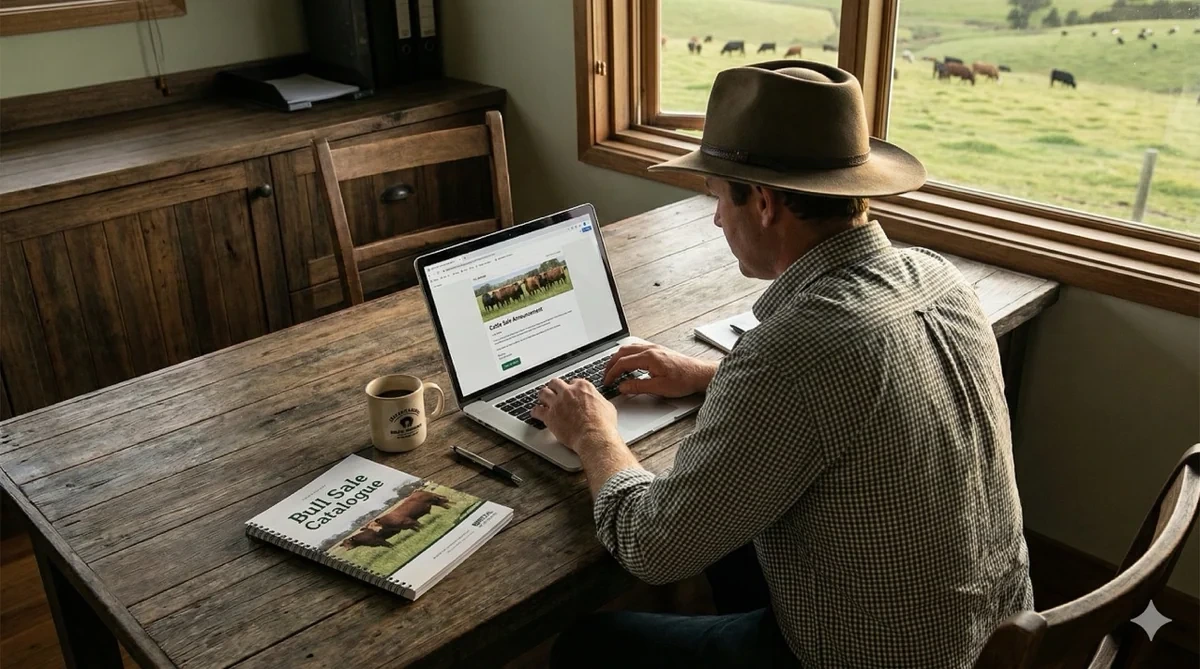
AI Email Generation: Better Sale Emails in Minutes
Frisbee's AI email generation helps stud breeders write professional sale announcements, client follow-ups, and seasonal campaigns in minutes.
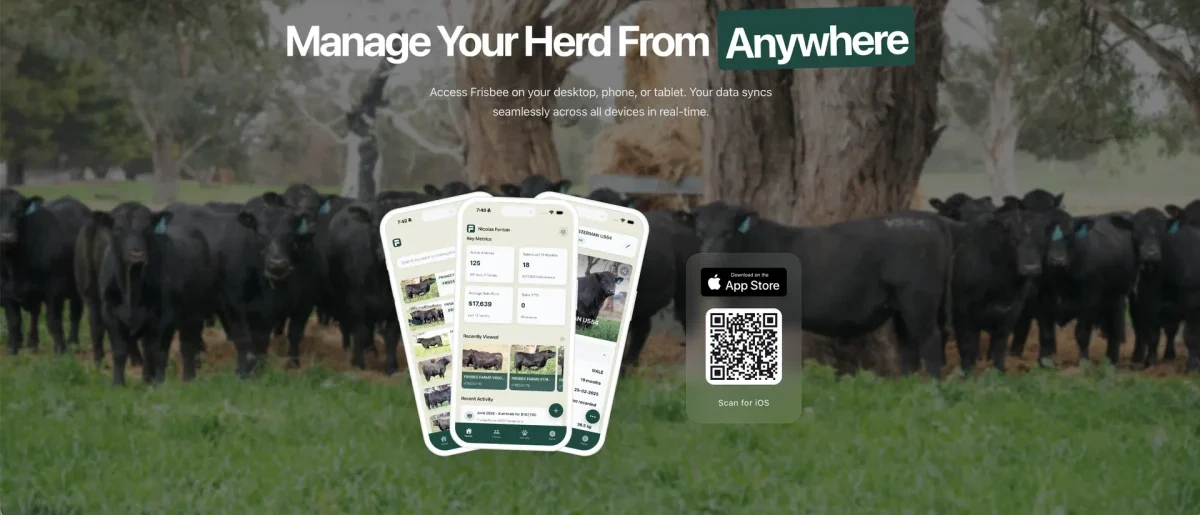
Frisbee iOS App Now Live: Manage Your Stud From Your iPhone
The Frisbee iOS app is now on the App Store. Record weights, capture photos, and manage your herd from anywhere on your property, no laptop needed.
Run your stud on Frisbee
CRM, sale catalogues, and marketing campaigns in one place, purpose-built for Australian cattle and sheep studs.
14-day free trial · No credit card required