
Running a Successful Bull Sale: From Catalogue to Gavel
Master every stage of your bull sale, from catalogue creation and buyer marketing to registration, sale day technology, and analysing results.
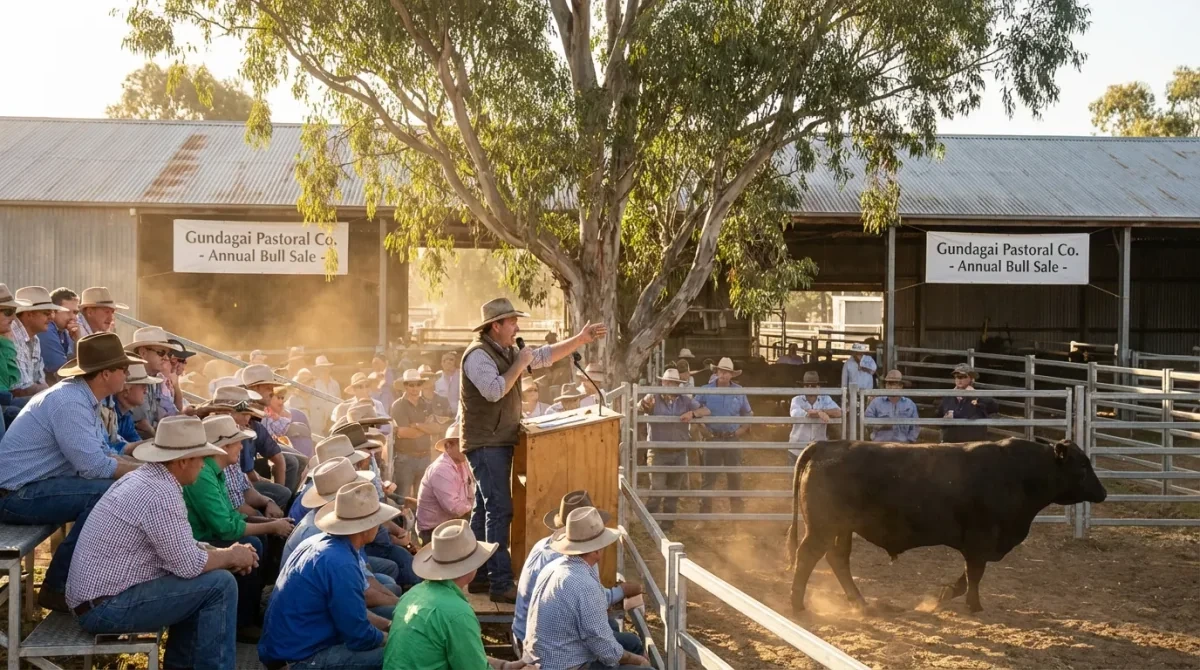
The difference between well-prepared and poorly-prepared bull sales can be substantial - industry analysis suggests the gap between professional and average sale execution can represent 10-20% of average price achieved. For a 50-bull sale averaging $10,000, that’s $50,000-$100,000 in potential value at stake.
A successful bull sale doesn’t happen on sale day. It’s the result of months of preparation, strategic marketing, professional presentation, and systematic follow-through. The studs achieving premium results consistently execute across every stage of the sale process.
Whether you’re selling twenty bulls on-property or a hundred through a multi-vendor sale, the fundamentals remain the same. This guide walks through each stage from initial planning to post-sale analysis, giving you a framework for sale success.
Pre-Sale Planning Timeline
Success starts with structured planning, not last-minute scrambling.
6-12 Months Before Sale
Set your sale date: Consider traditional sale season timing, avoid clashes with major sales, and confirm venue and service availability.
Define your offering: How many bulls will you offer? What age groups? Any females? Clear offering scope shapes all subsequent preparation.
Initial marketing plan: Outline your buyer communication timeline, catalogue approach, and promotion strategy.
Service provider engagement: Book auctioneers, photographers, videographers, and any other services early. Quality providers are booked well in advance.
3-6 Months Before Sale
Animal preparation: Bulls should be sale-ready physically. Assess condition, address any health or soundness concerns, and begin conditioning for presentation.
Photography scheduling: Book professional photography with adequate time for results before catalogue production.
Database verification: Review your buyer database. Update contact details, remove invalid contacts, and identify key prospects for personal outreach.
Content development: Begin writing lot descriptions, preparing breeding philosophy content, and gathering performance data for your catalogue.
6-8 Weeks Before Sale
Catalogue production: Complete photography, finalise lot order, and begin catalogue assembly.
First buyer communication: Announce sale date and early details to your buyer database.
Media engagement: Reach out to industry publications for sale coverage opportunities.
Logistics planning: Confirm venue arrangements, catering, accommodation options for interstate buyers, and parking.
3-4 Weeks Before Sale
Catalogue distribution: Release your catalogue digitally and begin mail-out of printed copies.
Intensive marketing phase: Email campaigns, social media promotion, and direct outreach to key prospects.
Registration opening: Begin accepting buyer registrations and tracking attendance.
Property preparation: Ensure your venue is presentable and functional for buyers.
Final Week
Final reminders: Send last-chance communications with logistics details.
Equipment preparation: Test all technology, confirm auctioneer briefings, and finalise lot presentation order.
Contingency planning: Weather backups, technology failures, and other potential disruptions.
Creating Professional Sale Catalogues
Your catalogue is often a buyer’s first serious engagement with your sale offering. It must impress.
Photography That Sells
Professional standards: Invest in experienced livestock photographers who understand conformation presentation.
Consistent setup: Same background, lighting, and positioning for fair comparison across lots.
Optimal conditions: Schedule photography when bulls are clean, well-fed, and calm. Avoid harsh midday light.
Multiple angles: Standard side profile plus front view minimum. Additional shots for standout animals.
Video consideration: Short video clips increasingly expected for online audiences. Plan for this during photography sessions.
Essential Catalogue Information
Every lot entry should include:
Identification: Name, tattoo, birthdate, and any relevant registration numbers.
Pedigree: Three-generation pedigree showing genetic heritage clearly.
EBVs/Indexes: Current genetic evaluations presented clearly with relevant percentile rankings.
Measurements: Scrotal circumference, weight, and frame score at minimum.
Description: Written context adding what data alone doesn’t convey.
Lot Descriptions That Work
Good descriptions complement data rather than repeating it:
Structural observations: Comment on attributes buyers can’t assess from data – feet, structure, movement, muscle pattern.
Breeding context: Explain what this animal represents in your program. Is he from a proven cow family? A new genetic direction?
Use recommendations: Help buyers match the bull to appropriate situations. Suit maiden heifers? Heavy muscling for terminal use? Ideal for specific country types?
Honest assessment: Credibility comes from balanced descriptions, not only superlatives.
Catalogue Distribution
Digital first: Email distribution to your database with easy online viewing.
Print for key buyers: Physical catalogues for top clients, interstate prospects, and industry partners.
Website hosting: Catalogue accessible on your website with individual lot pages for sharing.
Social media sharing: Easy sharing of individual lots across platforms.
Timing: Allow 3-4 weeks for buyers to review before sale day.
Marketing Your Sale to the Right Buyers
Effective marketing reaches likely buyers with compelling reasons to attend.
Email Campaign Strategy
Announcement (6-8 weeks out): Date confirmation, highlight offering, and save-the-date call to action.
Catalogue release (3-4 weeks out): Full catalogue access, feature lots highlighted, and viewing opportunity details.
Feature lots (2-3 weeks out): Spotlight individual animals with fuller descriptions and additional media.
Final reminder (1 week out): Logistics, registration closing, and urgency messaging.
Post-sale (within days): Results, thank you messaging, and unsold availability.
Targeted Communication
Segment your audience: Send different messages to different buyer groups.
- Repeat buyers receive recognition of their loyalty
- First-time prospects need more introduction to your program
- Commercial producers need different emphasis than stud buyers
Personal outreach: Phone calls to key prospects. Direct conversation beats mass communication for important relationships.
Industry Engagement
Media partnerships: Editorial coverage in industry publications reaches beyond your direct network.
Agent relationships: Brief stock agents on your offering. They influence purchasing decisions.
Industry events: Promote your sale when attending other sales and events.
Social Media Support
Consistent presence: Regular posts building to sale day, not a sudden burst of activity.
Behind-the-scenes content: Preparation, photography days, and sale setup build anticipation.
Individual lot features: Showcase standout animals with video and detailed information.
Easy sharing: Make content easy for others to share to extend your reach.
Managing Registrations and Enquiries
Professional registration and enquiry handling builds buyer confidence.
Registration Systems
Online registration: Make registration easy with online forms that capture necessary information.
Information captured: Contact details, bidding preferences, buyer number allocation, and special requirements.
Confirmation communication: Acknowledge registration with sale logistics and pre-sale information.
Registration tracking: Monitor registration numbers against expectations. Low registrations signal problems needing attention.
Enquiry Handling
Response timing: Respond to enquiries within 24 hours, preferably faster. Delayed responses lose buyers.
Information consistency: Ensure everyone responding provides consistent, accurate information.
Record keeping: Log all enquiries in your CRM for follow-up regardless of sale outcome.
Question patterns: Track common questions. If many buyers ask the same thing, address it proactively.
Property Viewings
Scheduled viewings: Offer set viewing times for efficiency while accommodating key buyers’ schedules.
Professional presentation: Bulls should be presented well for viewings, not just sale day.
Knowledgeable staff: Anyone showing bulls should answer questions competently.
Follow-up: After viewings, follow up with attendees. Did they have further questions? Are they planning to bid?
On-the-Day Technology and Tools
Sale day technology should enhance, not complicate.
Essential Technology
Reliable internet: On-property sales need robust connectivity, especially for online bidding integration.
Device preparation: Phones and tablets charged, apps updated, access credentials confirmed.
Backup systems: Offline capability for critical functions. Technology fails at the worst moments.
Information Access
Buyer lookup: Instant access to buyer history and preferences during the sale.
Lot information: Complete lot details accessible if questions arise.
Real-time updates: Record results immediately as lots sell.
Online Integration
Live streaming: Many sales now offer video streaming for remote viewers.
Online bidding: Integration with online bidding platforms expands your buyer reach.
Real-time results: Feed results to online platforms as they happen.
Communication Tools
PA systems: Ensure everyone can hear clearly throughout your venue.
Signage: Clear lot identification and direction signage.
Staff coordination: Radios or messaging for crew coordination.
Post-Sale Follow-Up and Buyer Retention
Sale day isn’t the finish line. It’s a checkpoint.
Immediate Follow-Up
Buyer confirmation: Within hours, send purchase confirmations with payment and pickup details.
Thank you messages: Personal thanks to buyers, especially first-time purchasers.
Unsuccessful bidder follow-up: Contact serious underbidders about unsold bulls or next sale.
Attendee acknowledgment: Thank all who attended, even those who didn’t purchase.
Delivery and Settlement
Clear logistics: Provide detailed pickup or delivery information promptly.
Flexible arrangements: Accommodate reasonable buyer needs for timing and transport.
Settlement efficiency: Make payment easy with clear instructions and multiple options.
Documentation: Provide all required transfer documentation promptly.
Performance Follow-Up
Check-in schedule: Contact buyers at appropriate intervals (30 days, 90 days, end of joining) to check bull performance.
Issue resolution: Address any concerns promptly and professionally. How you handle problems affects future sales more than initial purchases.
Success capture: Gather feedback on successful outcomes for testimonials and case studies.
Long-Term Relationship Building
Database update: Ensure new buyers and updated information enter your CRM promptly.
Ongoing communication: New buyers join your regular communication program.
Next sale invitation: First invitations to next year’s sale should feel like relationship continuation, not cold outreach.
Analysing Sale Results for Next Year
Every sale generates insights for improvement.
Performance Metrics
Clearance rate: Percentage of lots offered that sold. Target varies by market conditions, but track trends.
Average price: Overall and by category. Compare to industry benchmarks and your own history.
Top and bottom: Highest and lowest prices achieved. What distinguished them?
Buyer composition: New versus repeat buyers. Geographic distribution. Buyer type breakdown.
Buyer Analysis
Registration to purchase: What percentage of registrants actually bought? Low conversion suggests issues with offering or pricing.
Bidding activity: How many bidders competed? Deep bidding indicates strong demand.
New buyer acquisition: Did marketing efforts bring new buyers? Which channels performed best?
Lapsed buyer return: Did any previously inactive buyers return? What brought them back?
Marketing Effectiveness
Email performance: Open rates, click rates, and correlation with attendance.
Channel attribution: Which marketing channels drove which buyers?
Content performance: What content generated most engagement?
Competitive analysis: How did your marketing compare to competing sales?
Operational Review
What worked: Document successful elements to repeat.
What didn’t: Identify problems without blame. How to prevent next time?
Buyer feedback: What did buyers say about their experience?
Team debrief: Gather perspectives from everyone involved.
Planning Implications
Translate analysis into action:
Offering adjustments: Does demand suggest changing your offering composition?
Pricing review: Were reserves appropriate? Did pricing align with buyer expectations?
Marketing refinements: Which activities should expand? Which should stop?
Process improvements: What operational changes would improve buyer experience?
The Bottom Line
Running a successful bull sale requires excellence across every stage – from early planning through post-sale follow-up. The studs achieving consistent results don’t have secret genetics advantages. They execute the fundamentals professionally at every step.
Start earlier than you think necessary. Plan more thoroughly than feels required. Present more professionally than competitors. Follow up more systematically than expected. These disciplines compound into sale results that reward your genetic investment.
Ready to run your best sale yet?
Frisbee brings together the catalogue creation, buyer management, and marketing tools you need to execute professional sales. Stop scrambling with spreadsheets and run sales that match the quality of your genetics.
Related reading:
- From Catalogue to Gavel: Streamlining Your Next Bull Sale
- Sale Day Success: Preparing Your Bull Sale with Software
- Bull & Ram Sale Software
- Professional Sale Catalogue Software
- What is a Clearance Rate?
Tagged
Run a sharper stud, on one platform.
Genetics, sales, clients and marketing — without the spreadsheet sprawl. Built for Australian cattle and sheep producers.
Get started with FrisbeeKeep reading
View all →The Best EID and NLIS Tag Readers in Australia: 2026 Buying Guide
Compare current Gallagher, Tru-Test, Allflex and Shearwell EID and NLIS tag readers in Australia on price, battery, memory, and iPhone pairing.
Digital Marketing for Sheep & Cattle Studs
Digital marketing strategies that reach more buyers for your sheep and cattle stud, from email campaigns to social media that showcase your genetics.
Building a Buyer Database: CRM for Livestock Producers
Your buyer list is your stud's most valuable marketing asset. How to build, segment, and nurture a buyer database that drives repeat sales.
Run your stud on Frisbee
CRM, sale catalogues, and marketing campaigns in one place, purpose-built for Australian cattle and sheep studs.
14-day free trial · No credit card required