
Sale Day Success: Preparing Your Bull Sale with Software
How livestock management software helps you prepare, present, and run a professional bull sale that maximises your returns on the day.
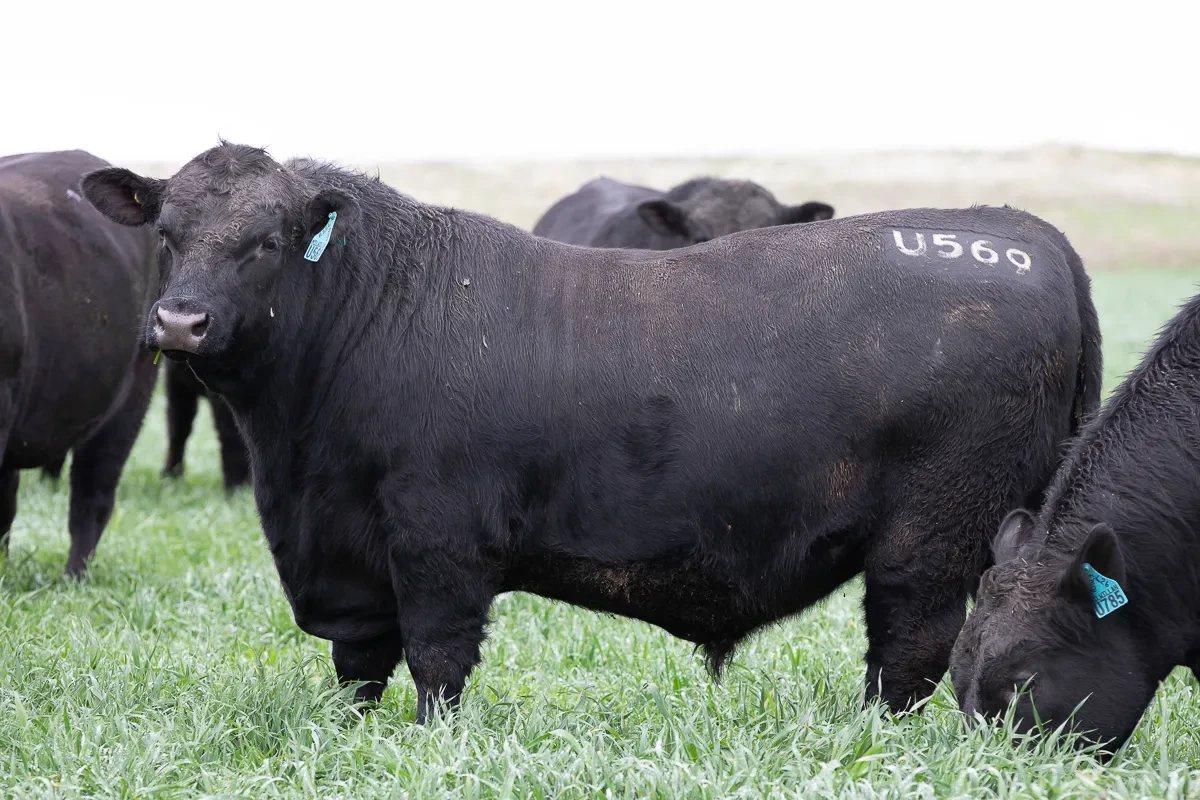
Every stud breeder knows the feeling. Months of work – years of breeding decisions – come down to a few hours when buyers gather and the bidding starts.
A successful bull sale doesn’t happen by accident. It’s the result of meticulous preparation, professional presentation, and efficient execution. And increasingly, it’s supported by software that handles the complexity so you can focus on the stock.
Here’s how livestock management software transforms sale preparation from stressful to systematic.
The Old Way vs The Smart Way
The Old Way:
- Spreadsheets with animal data, manually updated
- Photos stored somewhere on your computer (maybe)
- EBVs copied from the breed society website
- Catalogue designed in Word, hours of formatting
- Buyer enquiries tracked on sticky notes
- Sale day scrambling to find information
- Post-sale manual entry of results
The Smart Way:
- All data already in one integrated system
- Photos attached to animal records
- EBVs updated automatically
- Catalogue generated with a few clicks
- Enquiries logged and accessible
- Sale day information at your fingertips
- Results recorded and analysed instantly
Same sale, dramatically different experience.
Phase 1: Preparation (Months Before)
Great sale preparation starts long before the catalogue goes to print.
Selection and Assessment
Your software should help you:
- Filter potential sale bulls by age, genetics, and performance
- Compare candidates against each other
- Review EBVs and indexes for all candidates
- Identify animals that meet your quality standards
Data Completion
For every sale animal, ensure you have:
- Complete and accurate pedigree
- Current EBVs (check for recent genetic evaluation updates)
- All required measurements and scores
- Registration numbers and society compliance
Software flags missing data before it becomes a problem.
Photo and Video
Modern buyers expect visuals:
- Schedule professional photography
- Capture video of animals moving
- Store everything attached to the animal’s record
- Tag photos for catalogue use
Phase 2: Catalogue Creation (4-8 Weeks Before)
The catalogue is your primary marketing tool. It needs to be professional, accurate, and compelling.
Lot Organisation
Decide your sale order:
- Premium lots for prime bidding times
- Group related lots (full brothers, etc.)
- Consider buyer preferences
- Allow for late additions or withdrawals
Good software lets you drag-and-drop lot ordering.
Automatic Data Population
The magic of integrated software: select animals for the sale, and their data flows automatically into the catalogue:
- Pedigree formatted correctly
- EBVs displayed appropriately
- Photos placed consistently
- Index figures calculated
No copying, no pasting, no transcription errors.
Professional Design
Your catalogue reflects your stud. Features to look for:
- Professional templates with your branding
- Consistent lot page layouts
- Cover pages and introductions
- Index and reference sections
- Digital and print-ready formats
Review and Proof
Before publishing:
- Check every lot for accuracy
- Verify EBVs against current society figures
- Confirm photos match animals
- Have someone else proof-read
Software can highlight changes since last review.
Phase 3: Pre-Sale Marketing (2-6 Weeks Before)
Your catalogue is ready. Now get it in front of buyers.
Digital Distribution
- Generate PDF catalogues for email
- Create online versions with live links
- Share via social media
- Post to your website
Targeted Communication
Use your buyer database:
- Email catalogue to past buyers
- Highlight lots matching their preferences
- Send reminders as sale day approaches
- Log all communication for follow-up
Enquiry Management
When buyers reach out:
- Record every enquiry against the relevant lot
- Note specific interests and questions
- Provide detailed information quickly
- Track which lots are generating interest
This intelligence helps you gauge likely demand.
Phase 4: Sale Day Execution
The big day arrives. Preparation pays off.
Information Access
At any moment, you should be able to:
- Pull up any lot’s complete information
- Answer buyer questions with confidence
- Share additional photos or data
- Check an animal’s background
All from your phone, anywhere on the sale complex.
Real-Time Recording
As lots sell:
- Record price immediately
- Note buyer details
- Capture any relevant information
- Track sale progress
No waiting until after to enter results.
Handling Changes
Sales rarely go perfectly to plan:
- Lots withdrawn? Update instantly
- Order changes? Reorganise smoothly
- Buyer enquiries? Access information fast
Flexibility under pressure is crucial.
Phase 5: Post-Sale (Immediately After)
The gavel falls on the last lot. Your work isn’t quite done.
Result Recording
Comprehensive sale records including:
- Final prices for every lot
- Buyer details and contacts
- Passed-in lots and reasons
- Total clearance and average
Communication
- Thank buyers for their purchases
- Follow up with underbidders
- Provide purchase documentation
- Schedule pickup or delivery
Analysis
The data tells the story:
- What lots performed above/below expectations?
- Which breeding lines attracted premium prices?
- How did this sale compare to previous years?
- What should you do differently next time?
Good software generates these reports automatically.
The Compound Effect
Each sale you run with proper software gets easier:
- Templates improve with use
- Buyer database grows
- Historical data enables better analysis
- Processes become routine
Your fifth sale with software is dramatically smoother than your first sale without.
What to Look For in Sale Software
Essential features:
- Integrated animal database
- Catalogue generation
- Photo and video management
- Mobile access on sale day
- Buyer CRM
- Result recording and reporting
Nice to have:
- Online catalogue hosting
- Email marketing integration
- Digital bidding connections
- Video streaming support
The Bottom Line
A professional bull sale maximises the return on years of breeding work. The difference between a well-prepared sale and a chaotic one can be tens of thousands of dollars in results.
Software doesn’t replace good stock or good stockmanship. But it handles the complexity so you can focus on what matters: presenting your best animals to the right buyers.
Ready to run more professional sales?
Frisbee helps Australian studs prepare, present, and execute sales that showcase their genetics. From catalogue creation to result analysis, everything in one platform.
Book a Demo Before Your Next Sale
Related reading:
- Running a Successful Bull Sale: From Catalogue to Gavel
- From Catalogue to Gavel: Streamlining Your Next Bull Sale
Tagged
Run a sharper stud, on one platform.
Genetics, sales, clients and marketing — without the spreadsheet sprawl. Built for Australian cattle and sheep producers.
Get started with FrisbeeKeep reading
View all →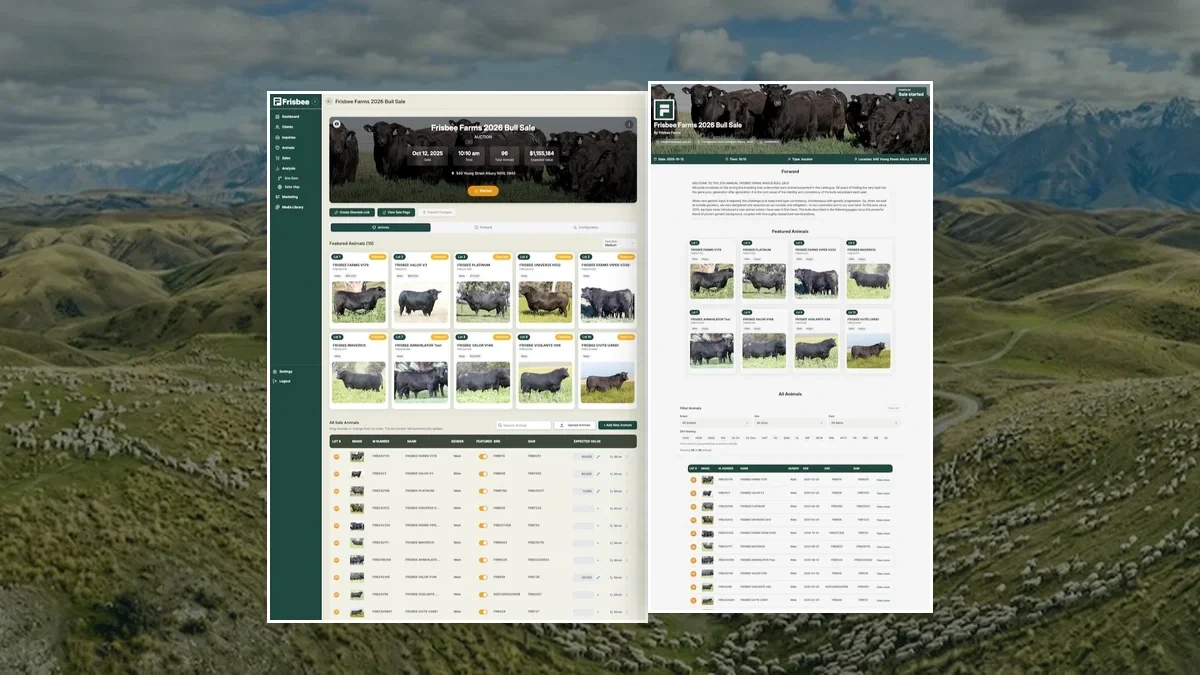
Build a Digital Sale Catalogue That Sells: A 2026 Guide
Why digital sale catalogues outperform PDFs and print, what makes them convert browsers into bidders, and how to build one that sells your genetics.
The Anatomy of a High-Converting Sale Announcement Email
How to craft sale announcement emails that livestock buyers open and act on, from subject line formulas to a ready-to-use template.
Livestock Photography 101: Capturing Your Genetics for Maximum Impact
How to photograph and film your livestock for maximum buyer impact, with practical tips on lighting, angles, and smartphone techniques.
Run your stud on Frisbee
CRM, sale catalogues, and marketing campaigns in one place, purpose-built for Australian cattle and sheep studs.
14-day free trial · No credit card required