
Client Relationships in the Digital Age: Livestock CRM for Studs
Repeat buyers are your most valuable asset. How livestock CRM tools help Australian studs build stronger client relationships and repeat business.
Repeat buyers typically account for 60-80% of annual sale revenue for established studs - yet most operations have no systematic way to track these crucial relationships. Acquiring a new buyer costs 5-10 times more than retaining an existing one, making buyer relationship management one of the highest-ROI activities for any stud operation.
Here’s a question every stud breeder should be able to answer: Who are your top 10 buyers from the last five years? What did they buy? How did those animals perform in their herds?
If you had to dig through files, spreadsheets, and memory to answer, you’re not alone. Most studs don’t have systematic client tracking - and they’re leaving money on the table because of it.
Let’s talk about livestock CRM (Customer Relationship Management) and why it matters for modern stud operations.
Why Client Relationships Are Your Biggest Asset
Think about the economics of your stud:
New buyer: Might come to one sale, might not buy, might never return. Marketing cost to acquire them is high.
Repeat buyer: Knows your stock, trusts your breeding, returns year after year. Marketing cost is near zero.
The maths is simple: keeping existing buyers happy is far more valuable than constantly chasing new ones. Yet most studs invest heavily in marketing to new buyers while taking repeat customers for granted.
What CRM Actually Means for Studs
CRM software in corporate settings tracks sales pipelines and customer interactions. For livestock studs, it’s simpler but just as important:
- Knowing who your buyers are
- Recording what they’ve purchased
- Tracking how those animals performed
- Maintaining communication over time
- Understanding their preferences and needs
It’s systematising what good breeders have always done naturally – remembering their clients and serving them well.
The Problem with Memory-Based CRM
“I know my clients. I don’t need software for that.”
Maybe. But consider:
- What happens when you’re not around? Can someone else serve that client?
- Can you really remember every purchase from 7 years ago?
- When you meet someone at a field day, do you know if they’ve bought from you before?
- Are you contacting past buyers systematically before sales?
- Can you identify who hasn’t bought recently and might need attention?
Memory works. Systems work better.
What Livestock CRM Tracks
Basic Contact Information
- Name, property, location
- Phone, email, preferred contact method
- Property type and enterprise focus
- How they found you originally
Purchase History
- Every animal they’ve bought
- Prices paid
- Sale events attended
- Bidding activity (even unsuccessful bids)
Animal Performance
- How purchased animals have performed
- Feedback they’ve shared
- Any issues or concerns raised
- Success stories and testimonials
Communication Log
- When you’ve been in contact
- What was discussed
- Follow-up actions needed
- Marketing materials sent
Preferences and Notes
- What types of animals they prefer
- Budget ranges
- Timing preferences
- Personal notes (kids’ names, property updates, etc.)
Practical CRM Uses for Studs
Pre-Sale Targeting
Before your annual sale:
- Pull up all past buyers
- Identify what they typically buy
- Match lots that fit their preferences
- Send personalised invitations highlighting relevant animals
Generic “come to our sale” emails vs “John, I’ve got three bulls that would suit your country this year” – which gets better response?
Post-Sale Follow Up
After purchase:
- Thank them personally
- Provide any additional documentation
- Set reminder to check in on animal’s performance
- Record feedback when you hear it
The six-month check-in call costs nothing and builds enormous loyalty.
Lapsed Buyer Recovery
Someone who bought regularly but hasn’t for two years:
- Identify them from your records
- Reach out with genuine interest
- Find out why they stopped (moved? Changed enterprise? Bad experience?)
- Address concerns and invite them back
You might recover valuable buyers you’d otherwise have lost permanently.
Event and Inspection Days
When hosting property visits:
- Know who’s coming and their history
- Prepare relevant animals to show them
- Have informed conversations about their needs
- Record interests and follow up appropriately
Referral Tracking
“How did you hear about us?”
- If a client referred them, note it
- Thank the referrer
- Track which clients generate referrals
- Recognise your advocates
Integrating CRM with Animal Records
The power of livestock-specific CRM is the integration:
- Client record links to every animal they’ve purchased
- Animal record shows who bought it and when
- Sale records connect buyers, animals, and prices
- Performance feedback links to both animal and client
This integration is why generic CRM software (Salesforce, HubSpot) doesn’t quite fit livestock. The relationships between clients, animals, and sales are unique to our industry.
Getting Started with Livestock CRM
Phase 1: Consolidate What You Have
Gather all your client information:
- Sale records with buyer names
- Contact lists
- Email histories
- Notes and memories
Get it into one place.
Phase 2: Clean and Organise
- Remove duplicates
- Update old contact details
- Fill gaps where possible
- Note relationships (same property, business partners)
Phase 3: Start Recording Systematically
From now on:
- Log every meaningful interaction
- Record feedback when you hear it
- Note preferences and interests
- Update contact details when they change
Phase 4: Use the Data
- Targeted pre-sale communications
- Personalised follow-ups
- Lapsed buyer outreach
- Informed conversations
The Technology Doesn’t Have to Be Complicated
You don’t need enterprise software. You need:
- A way to store client contact information
- A link between clients and their purchases
- A place to log interactions and notes
- Basic reporting and search capabilities
Livestock management platforms with built-in CRM handle this alongside your animal records. Everything connected. Everything accessible.
The Payoff
Studs that systematically manage client relationships report:
- Higher repeat buyer rates
- Stronger sale averages
- Better word-of-mouth referrals
- More informed conversations with buyers
- Smoother succession when principals retire
Your genetics are your product. Your relationships are your market. Manage both with equal care.
Want to build stronger buyer relationships?
Frisbee includes integrated CRM tools designed for livestock operations. Track buyers, log interactions, and turn first-time purchasers into lifetime clients.
See How Frisbee Manages Client Relationships
Related reading:
- Building a Buyer Database: CRM for Livestock Producers
- It’s Not Just Cattle, It’s Relationships: CRM for the Modern Breeder
Tagged
Run a sharper stud, on one platform.
Genetics, sales, clients and marketing — without the spreadsheet sprawl. Built for Australian cattle and sheep producers.
Get started with FrisbeeKeep reading
View all →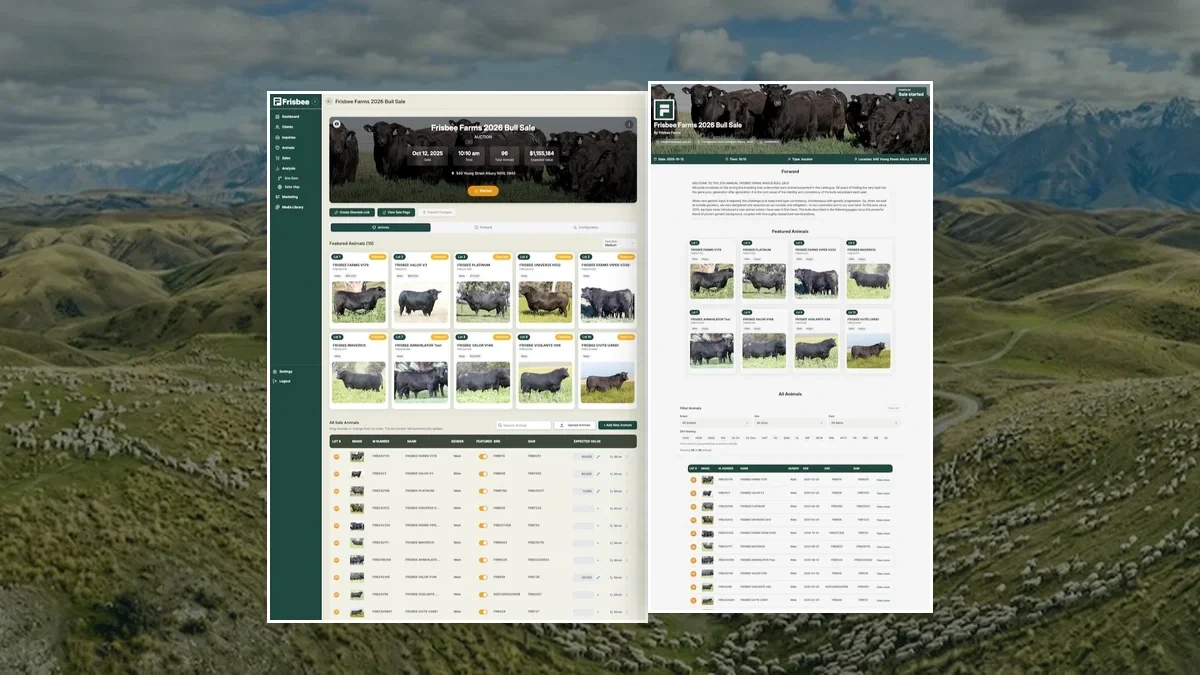
Build a Digital Sale Catalogue That Sells: A 2026 Guide
Why digital sale catalogues outperform PDFs and print, what makes them convert browsers into bidders, and how to build one that sells your genetics.
The Anatomy of a High-Converting Sale Announcement Email
How to craft sale announcement emails that livestock buyers open and act on, from subject line formulas to a ready-to-use template.
Livestock Photography 101: Capturing Your Genetics for Maximum Impact
How to photograph and film your livestock for maximum buyer impact, with practical tips on lighting, angles, and smartphone techniques.
Run your stud on Frisbee
CRM, sale catalogues, and marketing campaigns in one place, purpose-built for Australian cattle and sheep studs.
14-day free trial · No credit card required