
Australian Beef Outlook 2026: After Record 2025 Production
After near-record production in 2025, what the latest Rabobank outlook says about Australian beef prices, exports, and profitability in 2026.
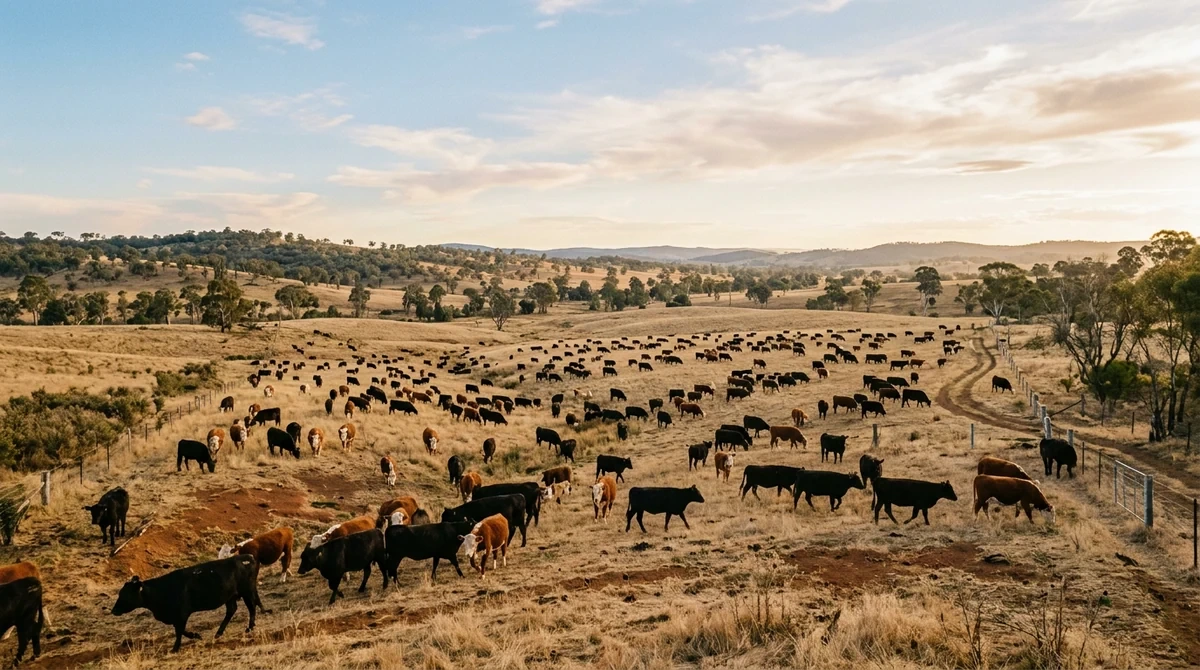
Australian beef production came close to matching the all-time record of 2.57 million tonnes set in 2024, capping off a remarkable run for the industry. Strong cattle numbers, favourable seasons across most of the country, and high carcase weights all contributed to the sustained output.
But as we move into 2026, the outlook is shifting. According to Rabobank’s Australian Beef Seasonal Outlook, producers are now navigating a changing landscape - one where drier seasonal conditions, evolving global trade dynamics, and tighter margins could reshape the picture.
Here’s what Australian cattle producers need to know heading into the rest of 2026.
How 2025 Set the Stage
Several years of good rainfall allowed the national herd to rebuild substantially. That larger breeding inventory drove increased calving, which flowed through as higher numbers of finished cattle reaching the market throughout 2025.
Rabobank’s senior animal proteins analyst Angus Gidley-Baird noted that the combination of elevated turnoff rates and consistently high carcase weights kept production volumes near record territory.
The one bright spot for producers? Global demand kept pace. With major competitors - particularly Brazil, the US, and China - all seeing production declines, Australian beef found willing buyers across key export markets. That balance between supply and demand underpinned stable prices and solid returns through the year.
What’s Changed Heading Into 2026
While the fundamentals were strong in 2025, several factors are now creating a different environment:
Drier Seasonal Conditions
The persistent dry in Victoria and southeast South Australia that marked 2025 could broaden in 2026. Rabobank’s modelling assumes drier-than-average conditions nationally, which would have flow-on effects:
- Higher fodder and agistment costs eating into margins
- Potential forced turnoff as producers destock to manage feed availability
- Lower producer confidence as seasonal risk increases
Shifting Price Dynamics
Rabobank’s modelling for 2026 projects the National Young Cattle Indicator (NYCI) trading in a range of 400c/kg to 420c/kg liveweight, with an average of around 410c/kg across the year.
For context, the 2025 average came in at approximately 409c/kg - itself a 23 per cent lift on 2024. So while prices are expected to hold relatively firm, the upside momentum may be flattening.
Restocking demand remains softer than the 2020–2023 period, which continues to weigh on prices for weaners, replacement cows, and heifers. Producers selling younger cattle categories should factor this into their planning.
Trade Uncertainty Persists
Tariff impositions and geopolitical tensions created headwinds throughout 2025, and these risks haven’t disappeared. With Australian beef heavily reliant on exports - roughly 75 per cent of total production heads offshore - any trade disruption has outsized impact on the domestic industry.
Global Markets: Where the Opportunities Sit
Despite the challenges, the global supply picture continues to favour Australian exporters in several ways.
United States
The US remains Australia’s most critical export market. In 2024, American consumers took almost as much Australian beef as the domestic market. The US herd is now in an early rebuilding phase, which means:
- Continued strong import demand for manufacturing beef
- Less US product competing in shared markets like Japan and South Korea
- Ongoing price support from tighter North American supply
Asia-Pacific
Asian markets showed gradual improvement through 2025 but remain subdued. Japan and South Korea offer some opportunity as US competition eases, though Rabobank expects volume gains to be modest.
China’s imports are projected to hold steady, but the economic headwinds in the Chinese market mean any growth will likely favour lower-priced South American product over Australian beef at premium price points.
Brazil’s Production Pullback
Brazil’s significant production decline - down around 550,000 tonnes or five per cent from 2024 - reduces one of Australia’s biggest competitors in global markets. Combined with smaller contractions from the US and China, overall global beef production is running below 2024 levels, keeping the supply-demand balance in Australia’s favour.
Producer Profitability: Tighter but Still Positive
The message for 2026 is one of cautious optimism. Cash receipts should remain healthy on the back of firm prices and high production, but costs are rising:
- Operating costs continue climbing in line with the 10-year trend
- Interest costs remain a factor after the increases through 2024
- Fodder and agistment could spike if dry conditions materialise broadly
- Cattle purchase costs have at least eased back from the 2022 highs
If forced destocking occurs in response to drought, producers may see an offsetting lift in cash receipts from higher sales volumes - but at the expense of herd size and future breeding capacity.
The Q1 Rabobank Rural Confidence Survey reflected this mixed outlook, with beef producers generally expecting incomes to hold steady rather than improve significantly.
Key Takeaways for Australian Cattle Producers in 2026
- Plan for dry - seasonal risk is elevated, so review your feed budgets and destocking triggers early
- Export markets remain strong - the US in particular continues to pull hard, supporting finished cattle values
- Restocking demand is soft - adjust expectations and selling strategies for younger cattle categories
- Watch trade policy closely - tariffs and geopolitical shifts can move the market quickly
- Manage costs proactively - with margins tightening, visibility over your financial position is more important than ever
After two years of near-record production and strong returns, 2026 is shaping up as a year where smart management and forward planning will separate the operations that maintain profitability from those that get caught out.
Having clear, real-time visibility over your herd performance, financial data, and market position isn’t a luxury anymore - it’s a necessity for navigating what’s ahead.
Want better visibility over your cattle operation? Book a Free Demo to see how Frisbee helps producers track performance, manage records, and make data-driven decisions.
Related reading:
Tagged
Run a sharper stud, on one platform.
Genetics, sales, clients and marketing — without the spreadsheet sprawl. Built for Australian cattle and sheep producers.
Get started with FrisbeeKeep reading
View all →
The Best EID and NLIS Tag Readers in Australia: 2026 Buying Guide
Compare current Gallagher, Tru-Test, Allflex and Shearwell EID and NLIS tag readers in Australia on price, battery, memory, and iPhone pairing.
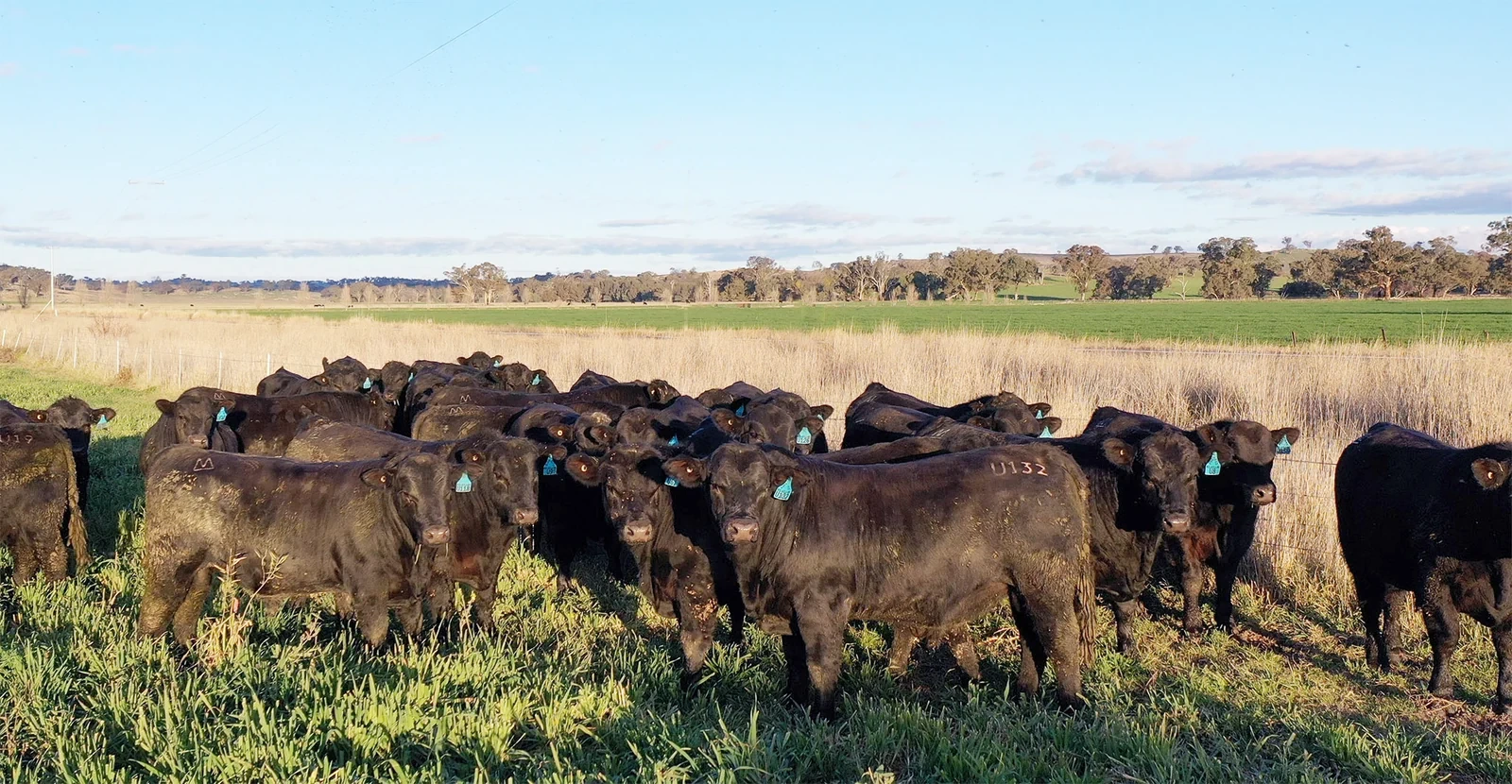
Livestock Ear Tag Colours in Australia: Complete Guide
A guide to livestock ear tag colours in Australia, covering NLIS sheep colours by year, cattle breeder and post-breeder tags, and state rules.
Sheep Pregnancy Scanning: The Complete Australian Guide
A complete guide to sheep pregnancy scanning in Australia: why and when to scan, wet and dry versus multiples, costs per head, and recording results.
Run your stud on Frisbee
CRM, sale catalogues, and marketing campaigns in one place, purpose-built for Australian cattle and sheep studs.
14-day free trial · No credit card required